
Invited Speakers
- McCLIM -- Daniel Kochmański
McCLIM is a long-standing GUI toolkit in the Common Lisp ecosystem, developed over decades by numerous prominent hackers with periods of both active work and stagnation. This talk reflects on hands-on experience of working on such a large project in the absence of continued maintainership, from modest contributions to sustained development and reconstructing the system's theory.
Reviving the McCLIM implementation required, besides fixing bugs, gaining incremental insight into its inner workings and how they did fare in light of the specification. This understanding was built through experimentation, regressions, and occasionally premature features. Early efforts focused on stabilizing the X11 backend and core, followed by refactoring and making the TrueType renderer the default and fixing infinite recursion pitfalls in the geometry substrate.
This groundwork enabled further improvements in the following years. A general refactoring of the X11 backend enabled transparency and highly performant drawing, where the system fully switched to the XRender extension. Refactoring the geometry module made it possible to reimagine the region algebra to be closed over its objects and specified operations (including region difference and unbounded sets).
More recent developments include work toward thread-safe drawing, improvements in text layout, additional backends (including SDL2), and ongoing changes to rendering and redisplay mechanisms, a new input editing substrate, and expanding the documentation. These efforts culminate in the recent release of McCLIM 0.9.9, codenamed Koladia.
Looking ahead, the talk outlines a set of near- and longer-term directions. These include continued work on the rendering performance, particularly around the rendering queue and animation support, new event types, as well as a proposed architectural separation between the windowing substrate and the high-level interface system implementing CLIM. The goal of this split is to make low-level parts of the system reusable and to allow different approaches to building user interfaces to share the same foundation. This also avoids imposing CLIM on users who want to explore alternative toolkit designs.
The presentation also touches on exploratory ideas, such as alternative rendering techniques based on signed distance functions, extending the geometry model toward three-dimensional representations and specifying the audio substrate, as areas for future investigation rather than immediate goals.
- ECL -- Daniel Kochmański
This talk reports on the ongoing WebAssembly port of Embeddable Common Lisp (ECL), focusing on runtime adaptation, toolchain constraints, and execution models. The project initially targets Emscripten due to its POSIX compatibility, which allows running ECL, including Boehm GC, with minimal modifications.
I will detail the implementation of runtime subsystems developed during the port, including streams, a bridge between Common Lisp and the JavaScript runtimes, and REPL integration both in-browser and via an external client.
The second part of the talk evaluates WASI as a cleaner compilation target and discusses the current limitations preventing practical adoption of WasmGC in C-based toolchains. Ongoing refactoring efforts in ECL's dynamic environment and type system will be presented as groundwork for future portability.
Finally, I will cover cross-compilation support for Common Lisp systems and demonstrate early experiments with graphical and interactive applications running in the browser.
- Lambda: the Ultimate Paradigm -- François-René Rideau
From its discovery in 1958, Lisp has been at the forefront of innovation in topics as diverse as Artificial Intelligence, Memory Management, Object-Oriented Programming, Control Structures, Human Computer Interaction—and much more.
Then, in the 1990s, progress largely stopped in Lisp, to happen in other ecosystems. Some Lisp technology was abandoned and forgotten; and while there remains a niche community of Lisp hackers who keep producing wonderful innovation, it is largely not at the forefront of technological progress anymore.
What happened? What made and makes Lisp such a good platform for creation? What advantages does Lisp still have? How can they be further amplified? What advantages did it lose? How can the effect be reduced or reversed? And what does the recent advent of Artificial Intelligence that can write software mean for the future of Lisp?
Back in the day, Lispers used the slogan “Lambda the Ultimate
” to boast about how Lisp could get to the very essence of so many issues that others barely understood. While some Functional Programmers have tried to claim the “Lambda” slogan for themselves, I’ll argue why indeed Lisp has the “Lambda Nature” in ways that no other programming language does—precisely because Lisp is more than a programming language.
Location
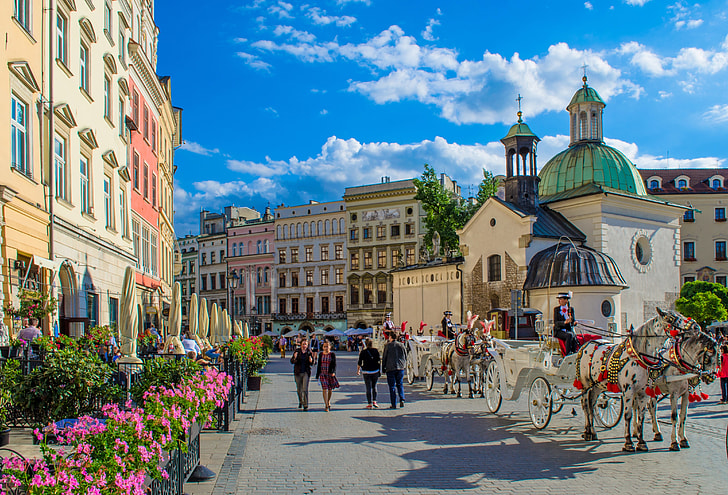 Skład Długa https://skladkreatywny.pl/ (CONFERENCE) 2nd floor, Długa 72 31-146 Kraków Poland
 Reachability
ELS Banquet
Date & Time: 11.05.2026 18:30
Location: Aquarius Restaurant, Bulwar Czerwieński 81 (river bank, next to the Wawel castle)
Cruise Time & Location: 18:50, Statek Sobieski (neighboring ship)
- The banquet will take place in the boat restaurant Aquarius.
- We begin with a 1-hour cruise on another vessel, Sobieski - 18:50-19:50
- The simplest way to get there from the conference venue is by bus:
- Lines 513, 169, 179, 304, and 503 should be the most convenient
- Begin at bus stop "Nowy Kleparz", a short walk from the conference venue
- End at bus stop "Jubilat", then a short walk to the river bank
Tourism
Sunday May 10: excursion to the Wieliczka Salt Mine

The Wieliczka Salt Mine is a historic underground site near Kraków and a UNESCO World Heritage Site. The visit includes a guided walk through chambers carved in salt, underground lakes, and historical mining structures dating back several centuries. Join us for an exploration a this unique cultural and historical landmark.
WARNING: group excursions to the mine require a minimum of 25, and up to 40 participants. We thus need to reach at least 25 people in order to secure at least one group. We thus urge you to register as soon as possible, and no later than April 19th if you are interested, in order to help us secure the tour. Registrants will be refunded if the excursion cannot be organized.
Organization
Programme Chair
-
 Mark Evenson Mark Evenson abcl.org (PROGRAMME-CHAIR) Austria
Organizing Chair
-
 Didier Verna Didier Verna https://www.didierverna.net/~didier/ EPITA / LRE (ORGANIZING-CHAIR) France
Local Chair
- Michał Herda Michał Herda Keepit (LOCAL-CHAIR) Poland
- Wojciech Gac Wojciech Gac Keepit (LOCAL-CHAIR) Poland
Committee
- Alan Ruttenberg Alan Ruttenberg (COMMITTEE) USA
- Dave Cooper Dave Cooper Genworks (COMMITTEE) USA
- Dimitris Vyzovitis Dimitris Vyzovitis Mighty Gerbils (COMMITTEE)
- Eitaro Fukamachi Eitaro Fukamachi (COMMITTEE) Japan
- Jason Hemann Jason Hemann Seton Hall University (COMMITTEE)
- Kristopher Micinski Kristopher Micinski Syracuse University (COMMITTEE) USA
- Marc Battyani Marc Battyani Enfabrica (COMMITTEE) USA
- Mark David Mark David (COMMITTEE) USA
- Michael Raskin Michael Raskin LaBRI (COMMITTEE) France
- Robert Goldman Robert Goldman SIFT (COMMITTEE) USA
- Thomas de Grivel Thomas de Grivel kmx.io (COMMITTEE) France
Virtualization Team
- Georgiy Tugai Georgiy Tugai Configura (VIRTUALIZATION) Sweden
-
Yukari Hafner Yukari Hafner Shinmera email@email.com https://shinmera.com Shirakumo.org (VIRTUALIZATION) Switzerland
Programme
Times are local to the conference. You can download the programme in iCalendar format here.May 11th
Registration, badges, meet and greet
Welcome messages and announcements
Sponsored Talk - Choosing Lisp: Commercial Use of Lisp at Keepit.
- Jakob Østergaard, CTO, Keepit
Coffee Break
Session 1: Efficiency & Complexity
Efficient Range Estimation with NDB Interpreted Code
- Max-Gerd Retzlaff
Taming Complexity: Building and Deploying a 270 KLOC Integrated Scientific Application in Common Lisp
- Jérôme E. Onwunalu
Lunch
Keynote - Lambda: the Ultimate Paradigm
- François-René Rideau
Coffee Break
Session 2: Language
A Highly Configurable Common Lisp Reader
- Jan Moringen
- Robert Strandh
Epsilon: A Module System for Lisp
- Jesse Bouwman
An Update on the Method Combinations MOP
- Didier Verna
Short Break
Lightning Talks
Banquet
May 12th
Registration, badges, meet and greet
Announcements
Keynote - McCLIM
- Daniel Kochmański
Coffee Break
Session 3: Paradigms & Semantics
FOL: Bridging Object-Oriented and Functional Programming via the Metaobject Protocol
- Frank Adrian
Ensuring Consistency with OptiX-Semantics: A Use-Case for Low-Effort Code Generation
- Daniel Gößwein
- Michael Hafner
- Kai Selgrad
Lunch
Keynote - ECL
- Daniel Kochmański
Coffee Break
Session 4: Applications
A Hardware Description Language and Simulation Framework in Common Lisp
- Stefan-Tiberiu Petre
A Lisp Dialect for NDB Interpreted Code
- Max-Gerd Retzlaff
Short Break
Lightning Talks